
Children and adults with scoliosis, kyphosis or other spinal disorders (ages ~10 and older) can benefit from treatment, which can be initiated at any phase of curve development. Therapy can be used in conjunction with bracing and is especially effective with 3-D bracing that emphasizes elongation and de-rotation of the curvature. Therapy is not a replacement for bracing treatment when it is indicated. 
|
A specialized physical therapy clinic utilizing physiotherapy scoliosis specific exercises (PSSE) according to the BSPTS Concept by Rigo (formerly BSPTS Schroth) for the treatment of atypical spinal curvatures. The primary goal of treatment is to stabilize the curves and reduce the chance of progression. Secondary benefits of treatment include improving balance, strength, symmetry, pain and respiratory efficiency.
The therapist will develop a customized exercise program based upon each patient's individual curve presentation to address postural imbalance and muscle asymmetries. Patients learn to integrate corrected postures and movement patterns into their activities of daily living and are trained to become independent with a home exercise program. |
BSPTS Concept by Rigo and the Schroth Method
First developed in Germany in the 1920s, the Schroth method was one of the first forms of PSSE used to treat spinal disorders in Europe. Dr. Manuel Rigo, the founder of the Barcelona Scoliosis Physical Therapy School (BSPTS), has built upon the original Schroth principles with advanced concepts developed through decades of clinical experience and research. Dr. Rigo's specialized scoliosis treatment and training is now known as the BSPTS Concept by Rigo. Utilizing 3-dimensional exercises for sensorimotor and kinesthetic development, this unique PSSE approach incorporates elements of Schroth, but is technically and conceptually different than the original Schroth method.
|
|
What is SEAS?
SEAS stands for "Scientific Exercise Approach to Scoliosis" and is another form of PSSE that was developed in Italy. It is a cognitive-behavioral approach to managing scoliosis with exercises that emphasize active self correction and maintaining these corrections while performing ADL's or activities of daily living. These techniques may also be incorporated into scoliosis treatment programs.
What to Expect
Your first visit will include a review of your x-rays, a musculoskeletal evaluation and postural assessment using clinical photographs. An individualized treatment plan will be developed specifically for you.
- Classification of curve pattern (according to BSPTS)
- Scoliosis specific home exercise program including written instructions and illustrations
- Body mechanics and postural awareness training
- Instruction to help integrate corrected movements in daily activities
- Scoliosis education and resources for patients and families
- Bracing assessment to ensure proper fit and function and recommendations if needed.
What are the exercises Like?
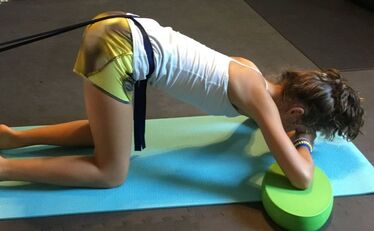
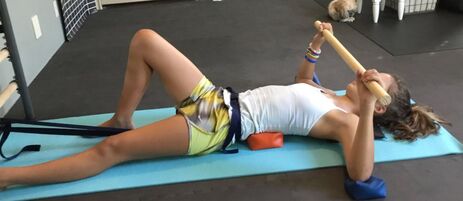
Physiotherapy scoliosis specific exercises (PSSE) are prescribed based on each individual’s curve pattern, mobility and function. They are designed to improve alignment through positioning and specific muscle activation with guidance from the PT. Various PSSE training programs offer certification to ensure the competency of the therapists who utilize these techniques. Wall bars, specialized pads, belts and mirrors may be used to help facilitate treatment. In order to be effective, the exercises must be performed at home on a routine basis.
How long will i be in therapy?
Treatment varies based on each individual evaluation. The duration of PT is influenced by each patient’s ability to learn self-correction and stabilization exercises, the magnitude of the curve(s), the risk of progression and the patient’s overall goals. Visits typically last 60 minutes and average 10-15 sessions. Extended treatment sessions lasting 90 to 120 minutes are available for patients traveling longer distances or have limited availability. The goal is for a patient is able to learn to perform a home exercise program consistently and independently on their own. Occasional re-assessments may be needed to monitor for curve changes and exercise performance.
What do i wear to SCOLIOSIS therapy?
Comfortable exercise clothing should or worn to PT sessions. Manual techniques are used and good visualization of the trunk and spine is necessary for optimal treatment. For females, a sports bra, bathing suit or halter top and shorts or yoga pants are preferred. Please note that a racer-back style top is NOT recommended for very FIRST visit since clinical photos of the back will be taken and these can block the view of the spine. For males, shorts and no shirt are preferred during the treatment session. If you have already been fitted with a brace, please bring it to your initial consultation.
Where is the clinic located?
The clinic is located in a private home-based gym in Auburn, Alabama. The clinic offers weekday, evening and weekend treatment availability as well as extended treatment sessions to accommodate student schedules.
what do I need to start therapy?
In the state of Alabama, patients may be evaluated by a physical therapist without a physician referral. However, therapists have limited "direct access" and can only treat patients with musculoskeletal issues for a limited period of time until a referral is required. Since scoliosis is a long-term complex musculoskeletal disorder, it is best treated by an interdisciplinary team, so a referral is needed in order to carry out a full treatment plan. The clinic also requests a copy of your latest x-ray images (preferably on disk or in digital format) and should include a lateral (or side) view of your spine if available.
Please note that Scoliosis Therapy is a cash-based practice and does not bill insurance. Payment is due at the time of service (credit cards are accepted). Please contact clinic for cost estimates.
Please note that Scoliosis Therapy is a cash-based practice and does not bill insurance. Payment is due at the time of service (credit cards are accepted). Please contact clinic for cost estimates.
